


1953-1967: Years of Endless Exile
The Iron Curtain descends, trapping all who remained
Stalin suddenly fell ill on Purim 1953, suffering a grotesque death in the days that followed. With the tyrant’s end, the post-war campaign he had been fomenting against the Jews came to an end. Through the 1950s, thousands of political prisoners were released from the Gulags and Soviet prisoners, including many Chassidim.
In Russia, remnants of the Chassidic community could be found in Samarkand, Uzbekistan, and the bigger cities, such as Moscow and Leningrad. At the same time, individual rabbis, shochets and mohels, continued to operate in the various cities where they had served for decades.
The relief experienced by the Jewish community was however temporary. Though Stalin’s bloodshed was not repeated, under Nikita Khrushchev, who took power in 1958, the late 1950s once again saw renewed difficulties for Soviet Jewry, with the establishment of anti-Semitic policy that would remain in one form or another until the empire’s demise.

The Iron Curtain descends, trapping all who remained
|

His family aided the Rebbe’s parents during their exile
|

He focused largely on educating children, in particular, those in the Bukharan community
|
Secret Chassidic gatherings ensured a Jewish renaissance
|

Across the generations, a special bond is fostered during a weekend of activities, lectures, spirituality and entertainment
|
I had hopes and expectations for everything. Then came the curse, the curse that was a blessing
|
Video | 21:37
The former chief rabbi of Israel describes a meeting of Israeli political leftists and how his visit to the Former Soviet Union tens of years later proved their prediction to be correct.
|
Video | 40:42
A history of the Yiddish literary scene of post war Soviet Russia
Tracing the postwar history of Yiddish publishing in the Soviet Union, describing the infamous purge of Yiddish writers in the early 50's and the subsequent revival in the late 50's. Looking particularly at the history of the Journal 'סאוועטיש היימלאנד' (Soviet Homeland) launched in 1961, and ran until 1991, reappearing in 1993 under the title 'די אידישע גאס' (The Jewish Street.)
|

Video | 5:49
Rabbi Yoel Kahn, a leading authority on Chabad Chasidic thought, recalls being present at a Purim farbrengen in 770 when the Rebbe told a very unusual story. But even more unusual, were the events which unfolded soon after. (1953)
|

Video | 5:20
Rabbi Hillel Zaltzman was active in the Soviet Jewish underground. When faced with hard times and tough decisions, he recalls secretly consulting his “zeide” in America. The word may simply mean “grandfather” in Yiddish, but to Rabbi Zaltzman and his comrades, it was the code name for “Rebbe.” (1960s)
|

Video | 4:59
Professor Herman Branover is a world-renowned physicist. Living as a refusnik in Leningrad in
1972, he found the phone number to 770 in the inside page of a Jewish prayer book...(circa 1972)
|

Rabbi Eliezer Zusia Portugal, the Rebbe of Skulen, had connections that would enable him to arrange the escape from Romania, at the cost of $2,000 per family
|
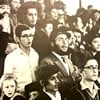
Rabbis talk of freedom amidst persecution during their youth
|

Video | 5:32
Rabbi Gershon Ber Schiff was active in the Jewish underground in the Soviet Union. When he heard that his relative was visiting Moscow from beyond the Iron Curtain, he was torn about whether to put himself and his activities in danger in order to meet - until he heard a message from the Rebbe. (1969)
|

Video | 4:17
When Gershon Ber Schiff finally emigrated from Russia, he was excited to be spending Passover with the Rebbe. When the Rebbe called an unscheduled farbrengen on the first day of the festival, he realized just how much it meant to the Rebbe, too. (1971)
|
Video | 5:29
After promising to maintain secrecy and informing the Rebbe of his plans, he was given some contacts by the Rebbe. (1960's)
|
I’m not talking about a small fine, or even some lashes. This could mean that my father, and maybe even I, would sit in a dark and dingy jail cell. A wave of heat overcame my body.
|
In 1951 my father, Rabbi Moshe Greenberg, was twenty years old and a prisoner in a Soviet labor camp in Siberia. That Yom Kippur, he faithfully prayed all the day’s prayers. All, that is, except for Kol Nidrei.
|

My grandfather kissed my cheeks and said, "Morty, every morning when you wake up, I want you to look at the mirror and strike your heart three times. While you are striking your heart, recite, 'I was born a Jew; I was raised a Jew; and I will die a Jew.'"
|

Golda didn't know what to say until finally she blurted out in Yiddish, "adank aich far bleiben yidden". Her words spread through the throng like wildfire, and she felt her limp words were a poor mockery of prophetic incantation. "Thank you," she had told them, "for remaining Jews"…
|
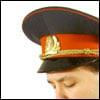
As the crowd dispersed from around the child, the Soviet official suddenly awoke from his drunkenness, pointed, and asked, "Who is that holy man?"
|
|
When Jews are united as one body, a Jew in a free land can provide life to a Jew living under oppression
|

A moment of faith does not separate between long-lost loves. It holds them together...
|

To my right sat my friend Berl, and to my left my friend Zalman. Yossel sat in front of me. The melamed was tall, with stern eyes, but with a warm and loving smile.
|

"It's Chanukah," cried Nachman, "the festival of miracles! We'll do the mitzvah the way it should be done. Not in some rusty can fished out from the garbage..."
|
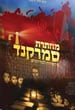
The Memoirs of Hilel Zaltzman
This book tells the story of the Chassidic underground that operated in the Soviet Union, upholding Judaism during the rule of communist terror. Gripping narrative sweep the reader to distant lands, and paints a picture of mysterious figures in Samarkand's alleys, secret Torah study under the constant threat of arrest by the KGB, and the long and hard fought victory in inspiring Jewish renaissance throughout the Soviet Union.
|
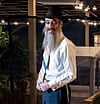
A focus on uniting people, after a family history of witnessing divisiveness
|
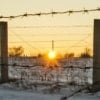
As the Siberian winter deepened, Chanukah came, and a group
of young Jewish prisoners convened for a short meeting.
|
Start a Discussion